
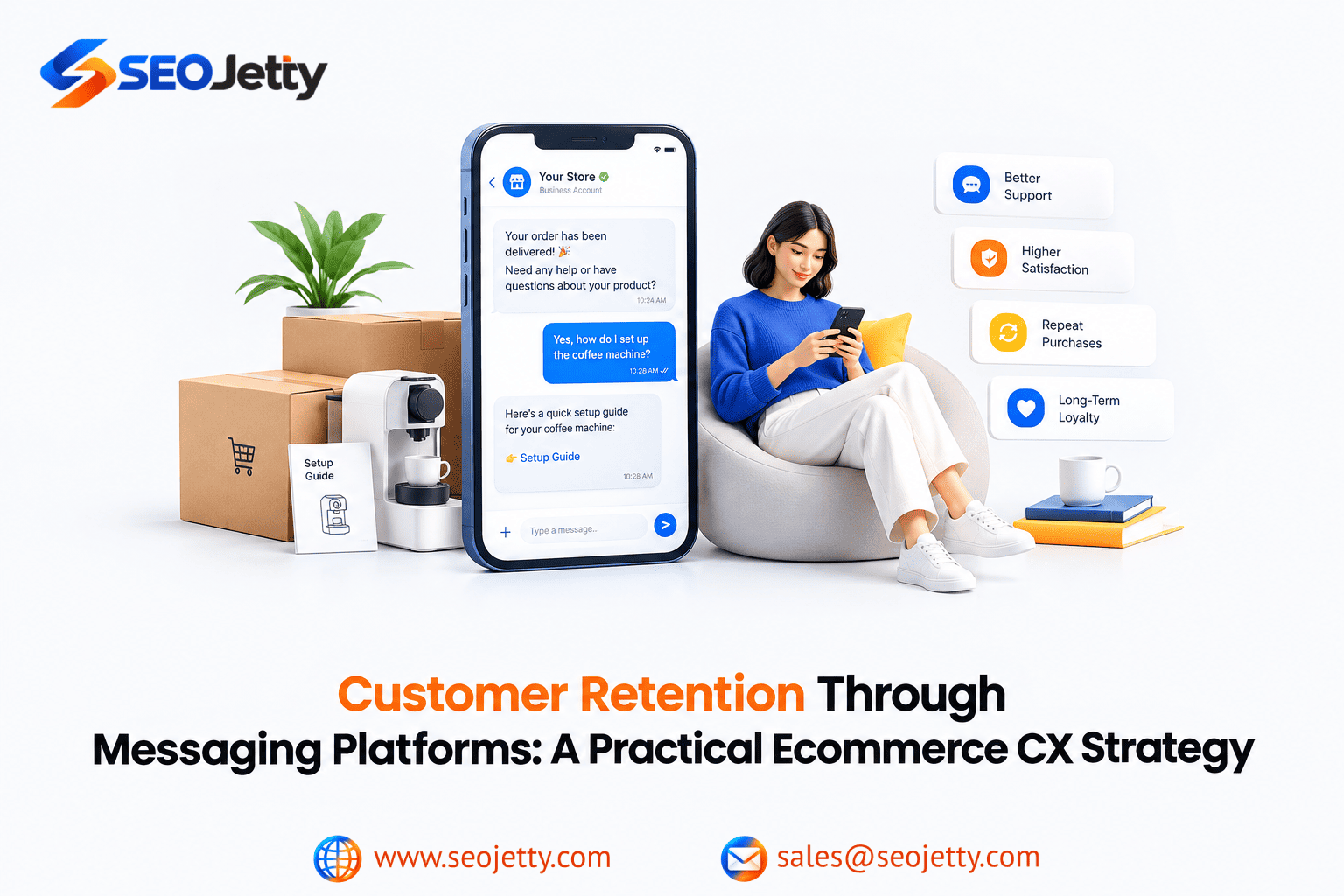
Customer retention through messaging platforms starts with useful conversations: resolving an order problem, explaining how to use a purchase, or sending a reminder the customer actually requested. Adding WhatsApp, SMS, or social direct messages does not by itself make customers return. The value depends on permission, reliable information, appropriate timing, and a team that can act on replies.
For ecommerce teams, a practical starting point is one post-purchase problem and one measurable journey. Choose a channel customers want to use, define when messages should stop, and compare subsequent purchasing with a suitable baseline or control group. Treat retention improvement as something to test.
Start with a customer problem you can resolve
Review recent support conversations, return reasons, and customer feedback. Look for a recurring problem that a conversation could help solve: confusing delivery information, difficulty setting up a product, or uncertainty about when to reorder. A messaging campaign cannot repair inaccurate inventory, a poor product, or a refund policy that staff cannot apply.
Separate customer lifecycle stages. An abandoned cart from someone who has never bought is primarily a conversion opportunity. A reminder for an existing customer may support repeat purchasing. Combining both in one report can make a campaign appear to improve retention when it mainly acquired first-time buyers.
Write a simple journey brief before choosing software:
- Customer need: What question or difficulty will the conversation address?
- Eligible audience: Which existing customers have the relevant need and permission?
- Action: What can the recipient do, and who handles the reply?
- Stop conditions: Which purchase, complaint, opt-out, or account event cancels the sequence?
- Evaluation: Which customer outcome will show whether the journey helped?
Choose a channel your team can support
WhatsApp, SMS, Messenger, and Instagram Direct Messages have different operating rules and capabilities. Do not copy a campaign between them without checking permissions, initiation restrictions, delivery information, and available integrations. Customer preference and service capacity should guide the choice.
| Channel | Potential role | Prelaunch check |
|---|---|---|
| Opted-in updates and product or order conversations | App versus Business Platform requirements, templates, escalation, and costs | |
| SMS | Brief reminders or updates linking to a secure page | Local permissions, sender setup, opt-out processing, and reply routing |
| Messenger or Instagram DMs | Continuing customer conversations on a chosen social channel | Current messaging permissions, account access, support ownership, and history availability |
Messaging can be asynchronous. Publish realistic service hours and distinguish an automated acknowledgement from a useful answer. For purchases, confirm what the platform supports in the customer’s market; a secure checkout link may be more appropriate than assuming payment can happen inside the conversation.
Set permission and preference controls first
Keep service communications and promotions separate in your journey design. Supplying a phone number for delivery should not be treated as blanket marketing permission. Record the channel, purpose, time, and source of each permission, together with withdrawals and preferences.
The WhatsApp Business Messaging Policy requires recipient opt-in and respect for opt-out requests. For the Business Platform, initiated conversations require approved templates; replies without templates are permitted within the 24-hour customer service window, which resets with each user message. Outside that window, approved templates are required. Automated replies must have clear escalation options. Recheck these requirements when configuring a journey.
Legal requirements also depend on the market and message. As a UK example, ICO guidance says unsolicited electronic mail marketing to individual subscribers requires consent unless an applicable soft opt-in’s conditions are met. The products-and-services exception has specific requirements, including an opportunity to opt out at collection and in subsequent messages. Do not apply a UK exception as a worldwide rule.
For a global operation, maintain a market-by-market approval process. Check language, local time, permitted content, and withdrawal handling. Test that a preference change reaches every connected campaign before launch.
Build useful post-purchase journeys
Order support and delivery exceptions
Use confirmed order or carrier events to explain what happened and what the customer can do next. If a parcel is delayed, show the latest verified status and route replies to someone able to investigate. Avoid presenting an estimated delivery date as certain or sending repeat updates when nothing has changed.
During an unresolved complaint, consider suppressing promotional messages while preserving necessary service updates. The operating priority is resolving the problem. A discount sequence that runs alongside an unanswered support request can undermine the conversation.
Product guidance after delivery
For products that require setup or care, offer one relevant help message after confirmed delivery. Use the purchased item to choose instructions, and provide a route to support. Avoid asking customers to repeat details that an authorized agent can already see.
Hypothetical example: A coffee equipment retailer offers opted-in buyers a short setup guide after delivery. A reply about a leaking machine creates a support case and pauses promotional follow-ups. A resolved case ends the help journey. This illustrates a possible workflow, not a measured retention result.
Replenishment and loyalty reminders
Suggest replenishment only where the product and customer context justify it. Begin with observed purchase intervals or a customer-selected schedule, then let recipients adjust or stop reminders. A purchase should cancel the pending reminder, and a stock check should prevent promotion of an unavailable item.
Loyalty messages should explain an actual benefit or action, such as how to redeem a valid reward. Verify balances and expiry terms before sending. Avoid manufactured urgency, inaccurate exclusivity claims, or incentives that cost more than the resulting contribution margin.
Feedback and service recovery
Ask a focused question after a meaningful interaction, rather than repeatedly surveying every purchase. Connect negative feedback to an owner who can investigate. Survey responses are diagnostic evidence, not proof that customers will buy again.
Use themes from conversations to improve instructions, delivery information, and policies. Otherwise, messaging becomes another way to collect the same complaints without addressing their cause.
Make automation safe to operate
For each journey, document the trigger, eligibility rules, verified data source, frequency limit, owner, and exit conditions. Check eligibility again just before sending: a customer may have reordered or opted out since entering the queue.
- Deduplicate events so one delivery scan cannot trigger several identical messages.
- Pause a journey if order data is unavailable or contradictory.
- Apply contact limits across campaigns, including email, rather than separately in each tool.
- Provide escalation for complaints, payment disputes, uncertain answers, and customer requests.
- Give agents relevant conversation context while restricting access to unnecessary personal data.
If AI drafts responses, constrain order facts, refunds, and product claims to approved information. Require an authorized action or human decision where appropriate. Measure resolution quality and repeat contacts; a fast automated reply is not the same as a resolved issue.
SEO Jetty lists routing, human handoff, and channel integration on its Automated Customer Support service page. If evaluating that service, ask how its proposed implementation would handle your specific consent records, order events, and escalation workflow.
Measure retention beyond message engagement
Delivery, clicks, and replies help diagnose a journey. They do not establish incremental repeat purchases. Customers who opt into messages may already be more loyal, so comparing subscribers with all non-subscribers can be misleading.
Where practical, randomly assign eligible, opted-in customers to a new discretionary messaging journey or a control group that continues normal service. Do not withhold required order notices or necessary support. Define the purchase window, exclusions, and primary metric before reviewing results.
| Metric | Definition or use |
|---|---|
| Cohort repeat purchase rate | Customers in a defined starting cohort who place a subsequent qualifying order within the window ÷ all customers in that cohort. Apply consistent refund and cancellation rules. |
| Repeat purchase lift | Treatment repeat purchase rate minus control repeat purchase rate, expressed in percentage points; assess uncertainty before interpreting a difference. |
| Contribution per eligible customer | Compare revenue after relevant product, discount, fulfillment, refund, messaging, and support costs. Count all assigned eligible customers, not only message clickers. |
| Resolution and burden | Track time to useful resolution, repeat contacts, and escalation workload to identify operational problems. |
| Customer guardrails | Monitor opt-outs, complaints, and available blocking signals using consistent denominators and reporting periods. |
Choose an observation period that fits the product’s purchase cycle. A short campaign cannot establish lifetime value. For non-subscription retail, define inactivity using expected purchase behavior rather than treating every quiet customer as definitively churned.
If randomized testing is impractical, compare similar cohorts and document differences in seasonality, acquisition source, product mix, and discounts. Present the result as observational; other factors may explain the change.
Launch a limited pilot, then decide
- Choose one need and audience. Use a recurring support or post-purchase issue with enough eligible customers to evaluate.
- Verify the journey end to end. Test delayed delivery events, duplicate triggers, opt-outs, purchases, unavailable stock, and human escalation.
- Assign ownership. Name the person responsible for replies, data failures, and pausing the campaign.
- Run through an appropriate purchase window. Review service problems during the pilot and retention outcomes when the cohort has had time to repurchase.
- Keep, revise, or stop. Consider customer feedback and operating costs alongside measured purchasing behavior before expanding.
A useful retention messaging program earns its place by solving a customer problem and producing evidence the business can assess. Start with a manageable journey, respect customer choices, and improve the underlying experience when conversations reveal friction.