
Enterprise software teams managing several markets face a concrete visibility problem: can a prospective buyer find an accurate explanation of the product, in the right language, with evidence relevant to their business?
Answering that question across conventional search and AI-assisted discovery requires coordinated work on content, technical access, localization, and measurement. It starts with useful information and clear ownership, rather than a separate set of writing tricks for every assistant.
This guide sets out a practical approach: choose markets deliberately, make localized pages accessible, publish evidence that helps software evaluations, and measure what happens after discovery.
What enterprise international AI SEO covers
Here, enterprise international AI SEO means managing an organization’s search presence across countries and languages while also evaluating how its information appears in AI-generated answers. It is a working business term, not a universal technical standard.
Traditional international SEO already includes relevance, trustworthy information, and technical accessibility. The additional work is to understand platform-specific access controls, inspect generated answers for factual errors, and develop reporting that separates mentions, citations, visits, and qualified opportunities.
Generative Engine Optimization (GEO) refers to work around generative answer experiences. In this guide, GEO does not mean geographic targeting. Teams may also use Answer Engine Optimization (AEO) to describe work around answers and conversational discovery. Define these terms in project briefs so different teams know which deliverables they own.
Start with a market and buyer-question brief
Do not treat the USA, Europe, APAC, or the Middle East as uniform audiences. Select specific country-language combinations based on product availability, sales capacity, existing demand, and the ability to maintain accurate local information.
For each priority combination, create a short brief covering:
- The buyer: the role, software category, problem, and evaluation stage.
- The offer: available features, implementation options, support coverage, and commercial limitations.
- The questions: terminology and concerns collected from sales calls, support requests, site search, and local search research.
- The evidence: approved documentation, integration details, benchmarks, and relevant customer material with permission.
- The next step: a suitable technical resource, contact route, or localized demonstration request.
As an illustrative planning exercise, imagine a workflow platform entering Germany and Japan. Ask local reviewers whether prospects prioritize deployment options, procurement documentation, integration compatibility, or implementation support. These are research questions, not assumptions about all buyers in either country.
Prioritize work where three conditions coincide: a meaningful buyer question, a supported product offer, and a team able to keep the answer current. A market with interesting search volume but no viable delivery or support model may be a poor immediate investment.
Keep technical access and platform controls clear
Understand what Google actually requires
Google’s guidance for AI Overviews and AI Mode says existing SEO practices remain relevant. Supporting pages must be indexed and eligible for a search snippet. Special AI schema, AI text files, or additional technical requirements are not necessary. Eligibility does not guarantee inclusion.
Use Google’s documented Googlebot and preview controls to manage Search exposure. Avoid assuming that a setting for another Google AI product controls AI features within Search.
Separate search access from model training
Each provider’s documented controls need their own review. For example, OpenAI distinguishes OAI-SearchBot from GPTBot: the former supports ChatGPT search, while the latter concerns potential foundation-model training use. These permissions can be managed independently.
Have engineering and security owners review intended access alongside robots rules, CDN restrictions, and server responses. Record the purpose of each decision. Do not broadly open restricted product portals or confidential documentation to solve a public-content visibility problem.
For Gemini, Copilot, Perplexity, and other experiences, check the relevant provider’s current documentation before changing access. Do not infer another platform’s requirements from Google or OpenAI guidance.
Give site owners a release checklist
Before publishing a priority page, verify the following in the production environment:
- The preferred URL returns successfully and does not require unintended authentication.
- Robots rules,
noindex, security systems, and server errors do not unintentionally prevent intended access. - The declared canonical matches the intended page and language strategy.
- Relevant crawlable pages link to it.
- The sitemap lists the preferred indexable URL.
- The important rendered content is accessible to Google.
- Search Console URL Inspection and indexing reports have been reviewed.
Treat this as a technical verification task. A sitemap submission or indexing request does not guarantee crawling, indexing, ranking, or AI citation.
Make localization useful and maintainable
Adapt the answer, not just the vocabulary
Keep product facts consistent while allowing local teams to explain them naturally. A translated implementation guide still needs review for feature availability, screenshots, support hours, terminology, and links to the correct regional next step.
Use a shared glossary for product names and technical terms. Give translators source context and approved evidence. Send product-security or regulatory statements to the relevant internal specialist rather than asking a language reviewer to verify them alone.
Where a localized version cannot be maintained, consider keeping a clearly labeled source-language resource instead of publishing an inaccurate translation. Make that limitation clear before the reader follows the link.
Connect equivalent pages correctly
Google’s hreflang guidance describes how to identify language and regional alternatives. Include the current page and its alternatives, use fully qualified URLs, and maintain reciprocal references. Choose supported codes, such as de-DE or ja-JP; a broad business region such as APAC is not a language-country code.
Use x-default where a fallback is appropriate, such as a language selector. Hreflang identifies alternatives; it does not translate a page.
Check canonical signals separately. Google advises a canonical in the same language when using hreflang, or the best substitute when none exists. Do not point every translated page to English by default. Validate the combined behavior on real page templates before a broader rollout.
Build evidence around software evaluation tasks
A useful content architecture follows decisions people need to make. Connect a category or solution overview to implementation, integration, security, and evaluation resources where they genuinely help the reader.
For example, an integration page should explain supported versions, authentication, permissions, setup responsibilities, and known limitations where those details are relevant. Link it from the product page and related documentation. A short answer backed by accurate implementation detail is more useful than repeated claims of innovation or authority.
For each important assertion, maintain a simple evidence record:
- The exact claim and the markets where it applies.
- The supporting source and its date or software version.
- The product, engineering, security, or commercial owner who can approve it.
- The pages and translations that must change when the fact changes.
Original value can come from a carefully explained implementation tradeoff or a documented evaluation method. It does not require inventing proprietary research. Label hypothetical examples and distinguish recommendations from measured outcomes.
AI can assist with outlines and translation drafts. Google’s guidance emphasizes checking generated material for accuracy, quality, and relevance. Apply human review to the body, title, descriptions, and other generated page elements before release.
Avoid turning one useful resource into dozens of country or industry variants with little added value. Google’s scaled-content policy concerns large amounts of low-value material produced primarily to manipulate rankings, regardless of how it is created.
Assign ownership before expanding
A global publishing process needs a clear division of responsibility. The following is a suggested operating model, not a search-engine requirement.
| Owner | Main responsibility |
|---|---|
| Global SEO lead | URL inventory, topic overlap, internal links, and measurement definitions. |
| Regional reviewer | Local terminology, buyer relevance, and translation quality. |
| Product or technical specialist | Capabilities, integrations, deployment details, and limitations. |
| Engineering owner | Templates, rendering, access controls, canonical signals, and hreflang. |
| Marketing operations | Conversion tracking, market attribution, and CRM reporting. |
Set review triggers for product launches, feature retirements, support changes, and major documentation revisions. A central fact change should create a task for every affected translation. Review cadence should reflect the risk of stale information, rather than changing dates merely to appear fresh.
Measure visibility separately from business impact
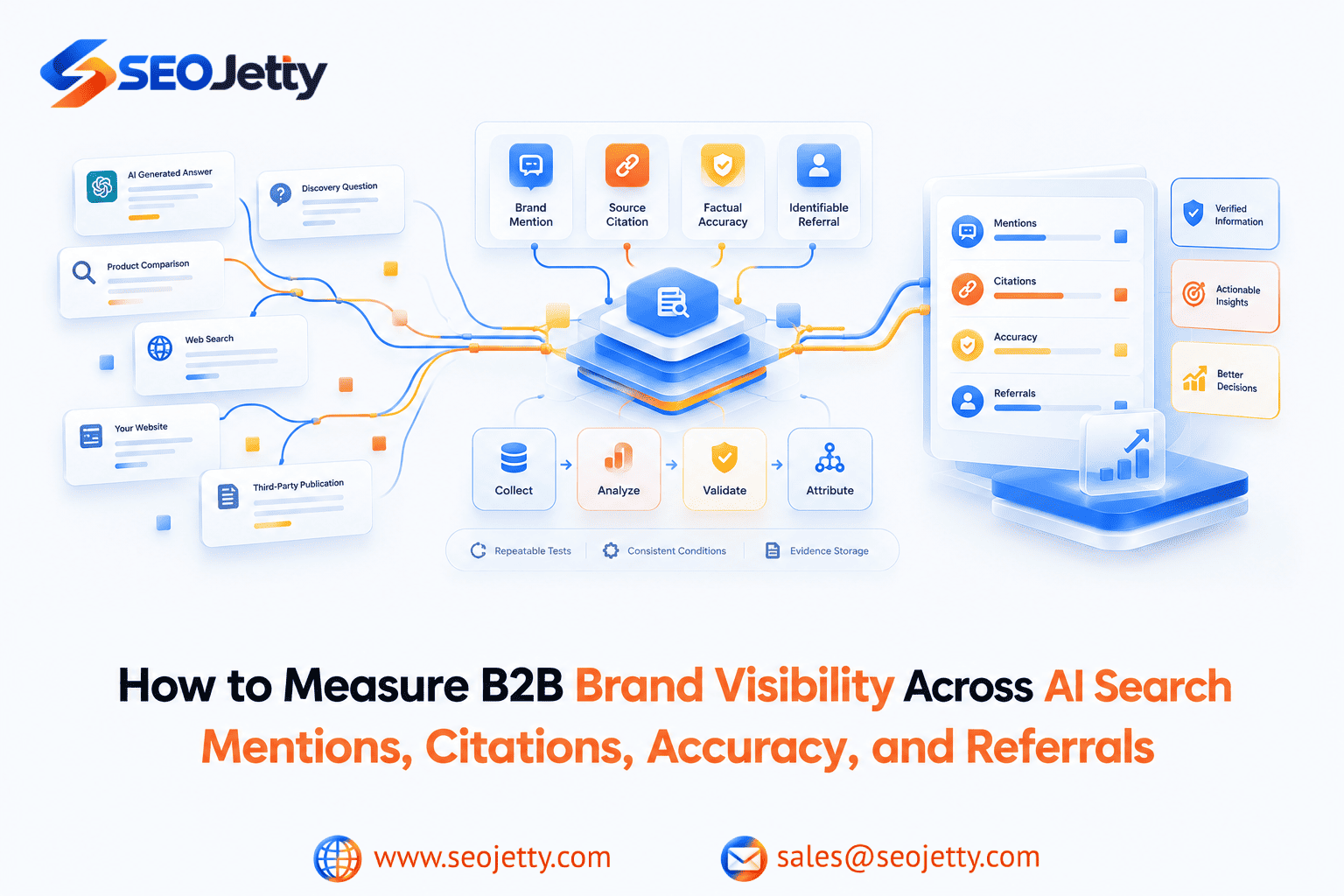
Use several evidence streams rather than compressing performance into a single AI visibility score.
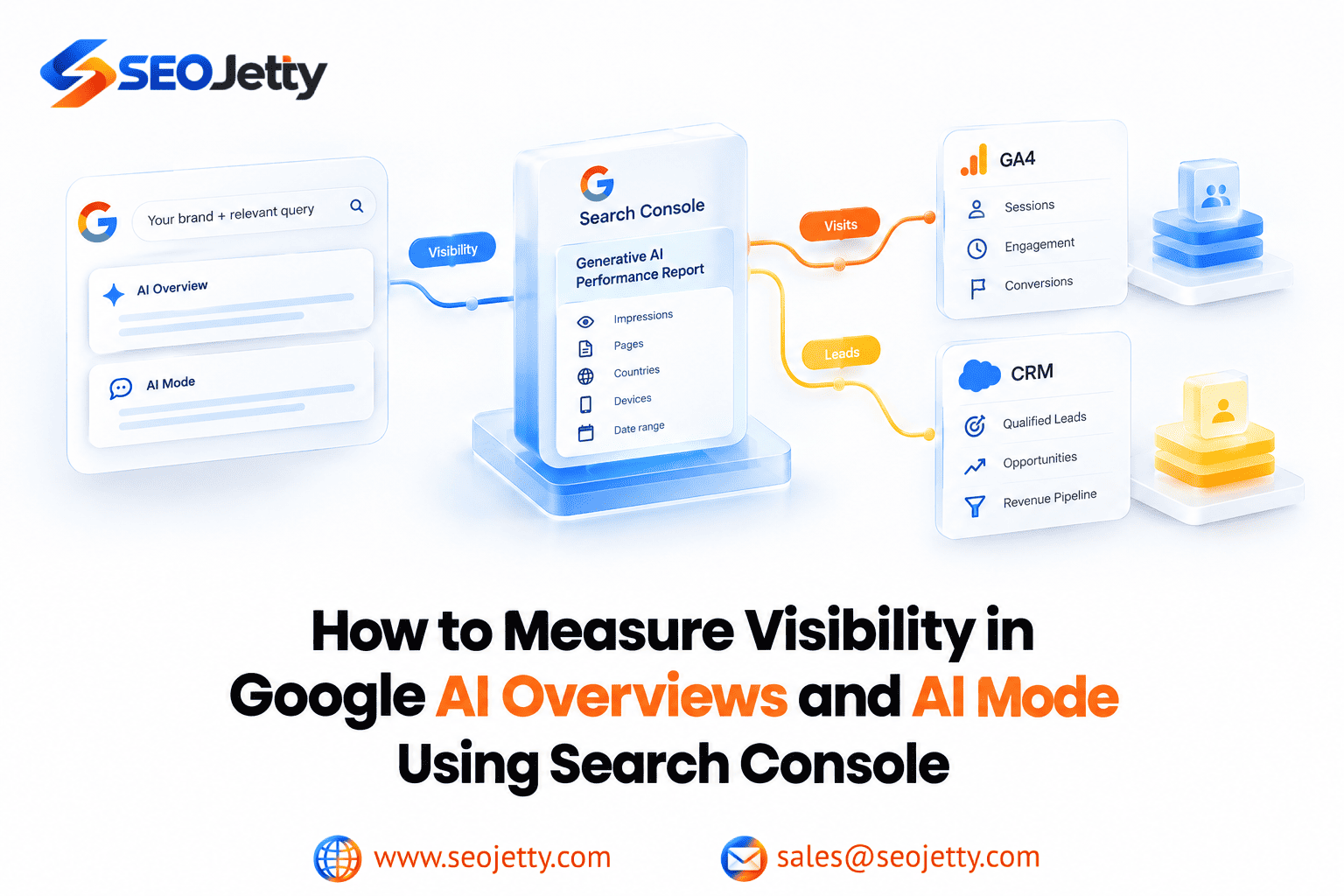
For conventional search, review country, query, and landing-page patterns alongside qualified conversions. Google reports AI-feature traffic within Search Console’s overall Web reporting; do not describe that aggregate as an isolated AI citation count.
Bing Webmaster Tools’ AI Performance reporting provides citation information across supported Microsoft and partner experiences. Its citation metrics do not establish ranking, placement, or revenue, and its grounding-query information is sampled. They do not represent all AI platforms.
For manual observations in ChatGPT, Gemini, Copilot, or Perplexity, keep a fixed set of buyer questions per market. Record the exact prompt, language, date, platform, available mode, response, cited URLs, and factual errors. Repeat checks under comparable conditions and report sample sizes. These observations describe the tested answers; they are not a market-wide exposure estimate.
Track referrals and resulting demonstrations or opportunities where your analytics and CRM can support attribution. Keep source limitations visible: a citation is not a visit, a visit is not a qualified lead, and assisted influence may not appear in last-click reporting.
A practical 90-day starting plan
This is a suggested delivery schedule, not a promise of search results within 90 days.
- Days 1–30: establish the baseline. Select one product area and two country-language combinations. Inventory existing URLs, collect buyer questions, identify overlapping pages, inspect technical access, and agree on measurement definitions.
- Days 31–60: fix and publish. Resolve priority template issues, improve a small set of existing resources, review local adaptations, and record approved product evidence. Check the live release rather than relying only on staging.
- Days 61–90: evaluate and adjust. Review indexing, engagement, qualified inquiries, sampled AI answers, and factual accuracy. Investigate weak pages before creating more. Expand only where the process and local support are sustainable.
Frequently asked questions
Should every country have a separate website?
No single structure fits every business. Choose based on operational ownership, brand needs, infrastructure, and maintenance capacity. Avoid a migration solely because a particular URL pattern appears fashionable.
How should partner-hosted documentation be handled?
Agree on who maintains the information and how corrections will be made. Keep your own product explanation accurate and link to the partner’s relevant technical resource. Do not claim control over a partner’s search visibility.
What if a platform gives an incorrect answer about our product?
Save the response and cited sources. Check for outdated or conflicting public information, correct what you control, and use the platform’s feedback route where appropriate. A correction on your site may not change an answer immediately.
Should customer-only documentation be made public?
Decide according to its content and access requirements. A reviewed public overview may answer evaluation questions while detailed customer material remains protected. Involve the documentation and security owners.
Can paid placements be reported as earned AI visibility?
Keep paid exposure and earned observations separate. Report the placement type, spend, source, and measurement method so stakeholders can interpret the result correctly.
When is outside help useful?
Consider specialist support when technical changes, local review, or reporting work exceeds internal capacity. Ask for defined deliverables, named responsibilities, evidence standards, and clear limits on claims about outcomes.
Build a global presence your team can keep accurate
Start with a limited set of markets and buyer questions. Make the relevant information accessible, support it with approved evidence, and give each language version an owner. Then evaluate discovery and qualified demand separately before expanding.
For teams evaluating external support, explore SEO Jetty’s International AI SEO service and discuss the markets, technical work, review responsibilities, and reporting scope your organization needs.