
A facilities director comparing battery storage suppliers needs more than a definition of renewable energy. They may need to understand installation constraints, operating assumptions, maintenance requirements, and whether a supplier supports their region.
For a CleanTech company, useful search visibility starts with answering those questions. AI SEO consulting can help organize research, identify gaps, and prioritize improvements, provided technical experts validate the work.
This guide explains what to commission, how to connect search activity to qualified enquiries, and how to evaluate a consulting partner in 2026. Examples are hypothetical planning scenarios, not client case studies or measured results.
What Are AI SEO Consulting Services?
AI SEO consulting services combine SEO strategy with AI-assisted analysis and workflows. Typical applications include grouping search queries, examining content inventories, drafting briefs, and investigating technical issues. Consultants remain responsible for checking evidence and recommending actions.
Two activities often sit under the same label:
- Using AI to support SEO: Applying tools to research, analysis, content preparation, or reporting.
- Improving visibility in AI search: Making information accessible and useful for discovery through AI-powered search experiences.
Buying an AI tool does not automatically achieve the second objective. A credible engagement explains which tasks use AI, what inputs they require, and where human review happens. Ask whether AI adds value beyond established crawling, analytics, and editorial tools.
Why CleanTech Search Strategy Needs Industry Context
CleanTech spans distinct markets, from smart grid software to industrial heat recovery. A campaign targeting every sustainability topic can attract an audience the business cannot serve.
Start with the offering, buying committee, and serviceable market. An engineering evaluator may need specifications; a finance leader may need transparent cost assumptions; procurement may need supplier qualifications and delivery coverage.
Use those needs to define search priorities:
| Hypothetical business | Buyer question | Useful content | Appropriate next step |
|---|---|---|---|
| Commercial energy storage supplier | What site information is needed to assess storage? | Site assessment checklist | Request a feasibility discussion |
| Carbon accounting software company | Which data can the platform ingest? | Integration and methodology documentation | Book a technical demonstration |
| Industrial efficiency provider | Can this solution fit our existing process? | Application guide with constraints | Submit process requirements |
| Smart grid technology company | How does integration work with existing systems? | Architecture and interoperability explanation | Arrange an engineering consultation |
Validate these proposed questions through sales interviews, customer enquiries, Search Console data, and market research. They are starting hypotheses, not verified keyword demand.
What Should an AI SEO Consulting Engagement Include?
1. Buyer Intent Research and Commercial Prioritization
Ask the consultant to map topics to buyer roles, decision stages, and existing URLs. AI can propose clusters, but a reviewer must check whether the terms refer to the same technology, application, and buyer.
For example, residential solar installation and utility-scale project development should not share a strategy merely because both contain “solar.” Similarly, searches about carbon credits may be irrelevant to a product focused on operational emissions measurement.
Prioritize topics using product fit, evidence available, market coverage, and the next decision the content supports. Treat search-volume estimates as directional. A specialist query with limited estimated volume may still address a valuable procurement question.
Expected deliverable: A prioritized topic-to-page map explaining audience, evidence, business relevance, and whether each page needs creation, revision, or consolidation.
2. A Technical Audit With Implementation Ownership
A technical audit should identify obstacles affecting important pages and specify who will fix them. A list of automated warnings is insufficient.
For a CleanTech website, useful checks include:
- Can search engines access product descriptions and application documentation?
- Are important specifications available as readable text, rather than only embedded in images?
- Do navigation and internal links connect educational resources to relevant solutions?
- Are duplicate product or regional URLs handled consistently?
- Do forms, navigation, and technical tables work well on mobile devices?
- Can users reach essential product information without completing a lead form?
Google recommends accessible text, internal linking, good page experience, and structured data consistent with visible content in its AI search guidance.
Expected deliverable: A backlog with affected URLs, evidence, severity, responsible owner, dependencies, and a method for validating each fix. AI-generated diagnoses should be reproduced before development work begins.
3. Content Built From Technical Evidence
Topic clusters are an organizational method, not a guarantee of authority. Build them around related buyer decisions that your team can address credibly.
A hypothetical commercial storage cluster could connect a solution page with resources on site requirements, operating considerations, maintenance, integration, and the inputs needed for an economic assessment. Add pages when they answer distinct needs; avoid separate articles for every minor phrasing variation.
Google’s people-first content guidance emphasizes useful, reliable information. Its generative AI guidance also cautions against producing many pages without adding value.
Give writers approved specifications, documented methods, and access to subject matter experts. Require review of units, boundaries, technical terminology, and product limitations.
For environmental claims, explain what is being measured. A claim about emissions during operation does not establish a product’s total life cycle footprint. The GHG Protocol Product Standard addresses emissions across a product’s life cycle. Identify the applicable method, scope, data, and assumptions before publishing numerical comparisons.
Expected deliverable: Evidence-backed briefs and a review workflow naming the technical approver and update triggers. An SEO consultant should not independently certify engineering or environmental claims.
4. International SEO Based on Serviceable Markets
Choose markets where the business can actually sell, deliver, and support its offering. Then research terminology and buyer needs in each language.
A translated page may still need different units, application examples, contact details, or availability information. Have qualified local reviewers check technical meaning. Verify jurisdiction-specific statements with appropriate current sources rather than copying them from another market.
Google recommends separate URLs for different language versions and explains how hreflang annotations identify localized alternatives.
Expected deliverable: A market and language plan covering URL structure, localization, annotations, review ownership, and lead routing.
5. Relevant Authority Development
Publish resources that specialist audiences have a reason to reference: documented test methods, approved research, technical explainers, or clearly scoped application guides. Relevant trade publications, research collaborators, and industry associations may be appropriate outreach audiences.
Evaluate opportunities by editorial relevance and audience usefulness. A high third-party domain score alone does not establish value.
Google’s spam policies identify purchased ranking links, automated link creation, and low-quality directory links as examples of link spam. Advertising and sponsorship links should be appropriately qualified.
Expected deliverable: An outreach rationale and placement record explaining relevance, editorial conditions, and any commercial relationship.
How Should CleanTech Companies Approach AI Search Visibility?
Generative Engine Optimization, or GEO, describes work aimed at visibility in generative search experiences. Answer Engine Optimization, or AEO, focuses on answer-oriented discovery. Neither label removes the need for accurate information and sound SEO.
For Google AI Overviews and AI Mode, Google’s documentation states that existing SEO fundamentals remain relevant, with no special schema or AI text file required. Meeting its requirements does not guarantee inclusion.
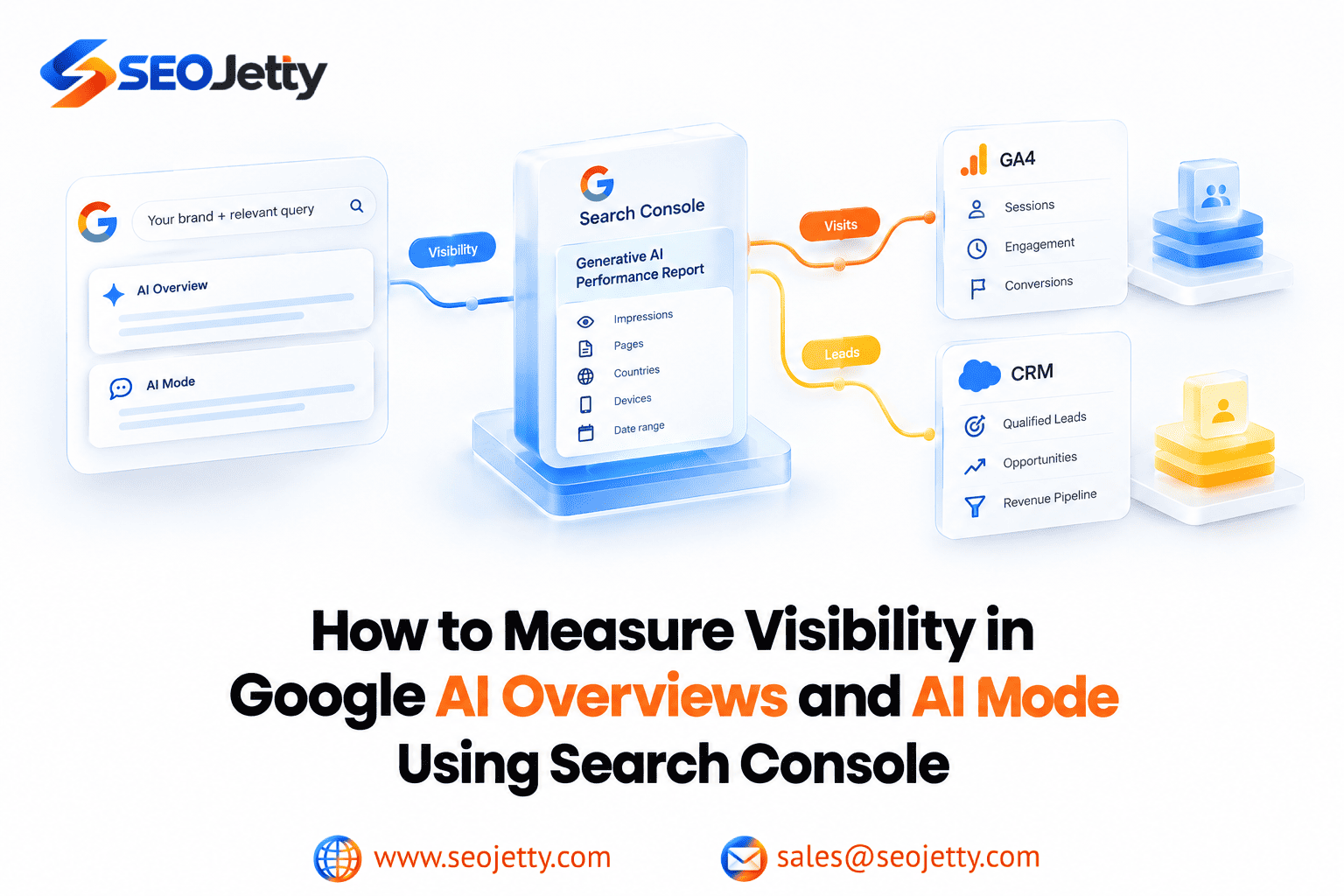
Google’s newer generative AI optimization guide also directs site owners to check inclusion settings for Search generative AI features in Search Console. Review current platform settings during implementation.
For your own content, use direct answers, descriptive headings, explicit product limitations, and references beside factual claims. These are editorial recommendations for clarity, not a guaranteed citation formula. Other platforms have their own access and discovery mechanisms; evaluate them individually.
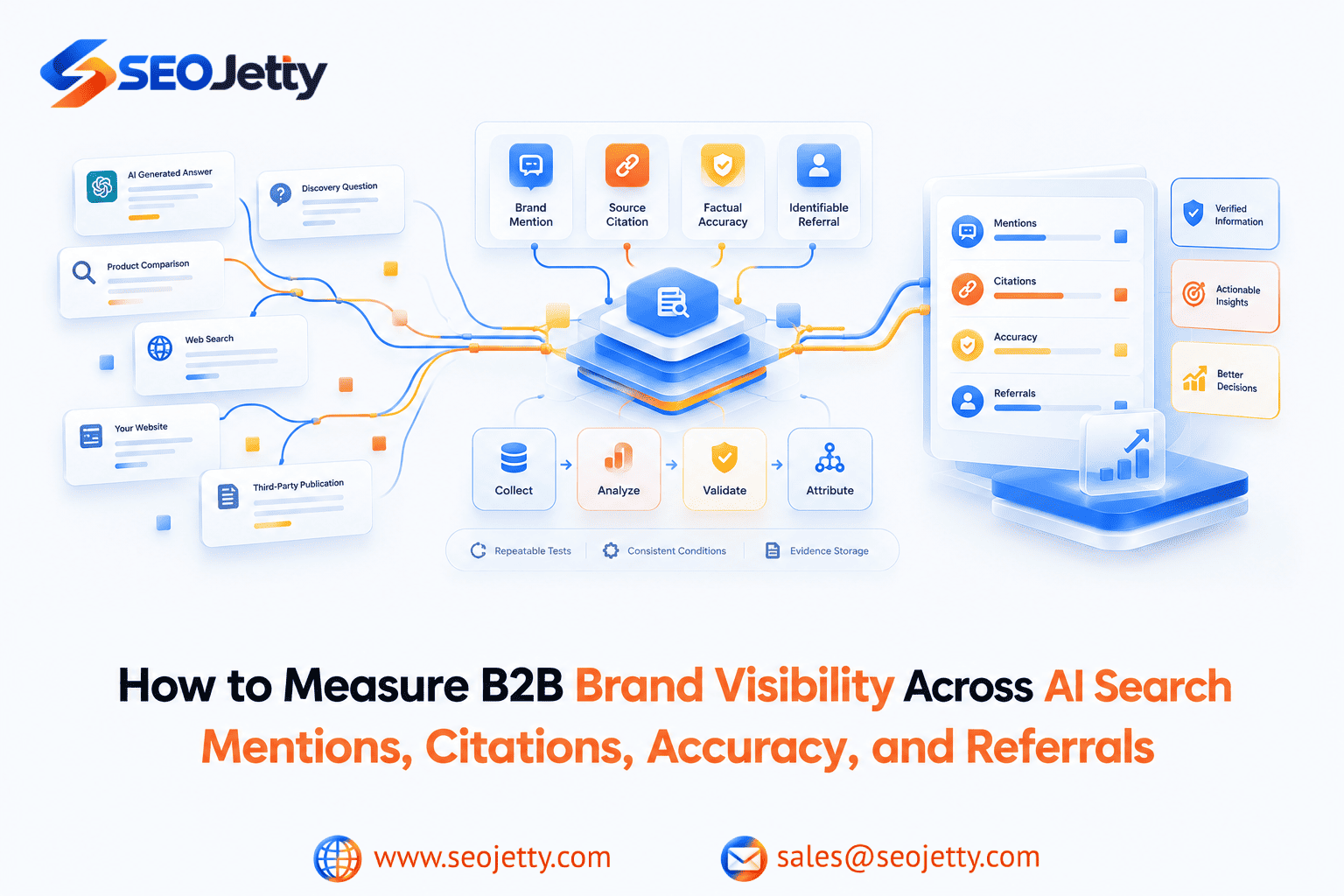
Track a fixed sample of buyer questions. Record the platform, date, location or language, exact prompt, answer, cited URL, and accuracy. Distinguish a brand mention from a linked citation and a referral visit. Repeated observations can reveal patterns, but a small sample cannot establish overall market visibility.
A Practical First 90 Days
Treat this as a suggested work sequence, not a promise of results within three months.
| Phase | Work | Reviewable output |
|---|---|---|
| Days 1–30: Establish the baseline | Interview sales and technical teams; review analytics, content, and priority URLs | Agreed audiences, baseline measures, evidence gaps, and prioritized backlog |
| Days 31–60: Implement a focused pilot | Address critical access issues; improve one solution page and a small supporting content set | Approved pages, completed fixes, and tested enquiry tracking |
| Days 61–90: Evaluate and refine | Review discovery, engagement, enquiry quality, and sampled AI answers | Findings, unresolved issues, and the next investment decision |
Choose one commercially relevant product or application for the pilot. Record implementation dates and other changes that could affect results. If progress is unclear, investigate indexing, audience fit, content usefulness, and conversion friction before expanding production.
Measure Buyer Progress Alongside Visibility
Agree on the definition of a qualified enquiry before reporting begins. Relevant criteria might include application fit, geography, project stage, and whether the request can be served.
Use a balanced measurement framework:
- Discovery: Relevant non-branded queries, priority landing pages, and visibility by target market.
- Buyer actions: Completed technical enquiries, demonstration requests, and feasibility discussions.
- Commercial quality: Sales-accepted enquiries and associated opportunities, where records support attribution.
- Content accuracy: Review completion, corrections, and outdated claims resolved.
- AI observations: Sampled mentions, citations, factual errors, and identifiable referrals.
Google reports AI feature activity within Search Console’s overall Web performance data, according to its measurement documentation. Do not label all organic traffic changes as AI search growth. Report attribution limitations and compare cohorts over periods appropriate to your sales process.
How to Choose an AI SEO Consulting Partner
Ask prospective providers to walk through an actual decision: why a page should be changed, what evidence supports the recommendation, who will implement it, and how success will be evaluated.
Request a sample audit, an evidence-backed content brief, a reporting example, and an explanation of AI tool use. Confirm how confidential product information is handled and whether your team retains access to accounts and working files.
If a provider claims CleanTech experience, ask for relevant, permissioned evidence and clarity about its role. General B2B experience may be useful, but it does not establish specialist engineering knowledge.
Compare fees against defined scope: site size, markets, technical complexity, expert interviews, development support, and reporting. Separate consulting costs from software, translation, implementation, and promotion budgets. No defensible universal price or results timeline follows from the phrase “AI SEO.”
Where SEO Jetty May Fit
SEO Jetty’s published service pages describe AI-powered search engine optimization, AI-powered SEO and content optimization, content marketing, and international AI SEO.
Those service categories are relevant to the work described here. However, a service listing does not independently demonstrate CleanTech expertise or campaign outcomes. The materials reviewed for this article do not establish a verified CleanTech case study.
For an initial discussion with SEO Jetty, bring one priority product, its target market, existing technical materials, and your definition of a qualified enquiry. Request a scoped proposal showing the research, technical work, content review responsibilities, and measurement plan before committing to a wider program.
Frequently Asked Questions
Can AI SEO consulting improve CleanTech search rankings?
It can support research and improvements intended to strengthen visibility. Outcomes depend on implementation, competition, website condition, and content usefulness. Rankings, traffic, and qualified leads cannot be guaranteed.
Does AI replace technical writers or CleanTech experts?
AI can help prepare outlines and organize approved material. Engineers, product specialists, and other qualified reviewers should validate technical and environmental claims before publication.
Is GEO a replacement for SEO?
It is best treated as a related discovery objective. Google’s guidance continues to emphasize foundational SEO for its generative search experiences. Assess other platforms separately.
How long should we wait before evaluating results?
Validate implementation as work is completed, then assess discovery and commercial indicators over an agreed review period. A 90-day pilot can test delivery and measurement; it does not establish a deadline for rankings or revenue.
What should a CleanTech company do first?
Choose one offering and buyer group. Review whether the existing solution page answers their technical questions, supports its claims, and provides a useful next step. Use that assessment to define the first consulting scope.