
An SEO content agency should help an ecommerce team decide which customer questions to answer, which pages to improve, and how to judge the work. Buying a monthly bundle of articles is only one part of that decision.
The strongest proposal connects content to your actual catalog, customer concerns, commercial priorities, and publishing capacity. It also explains what the agency needs from your team and where results remain uncertain. Use this guide to compare agencies on the quality of those decisions.
What does an SEO content agency do?
An SEO content agency combines content planning, search-intent research, writing, editing, and performance review. Its ecommerce scope may include product descriptions, category introductions, buying guides, comparisons, and post-purchase resources.
Services vary. Some agencies deliver approved copy; others also publish pages, coordinate technical changes, or manage localization. Establish who owns each responsibility before comparing prices. A writing package and a fully managed content program carry different workloads.
An agency is useful when your store has a clear information problem but lacks the capacity or expertise to address it consistently. If customers cannot find an in-stock product because navigation is broken, publishing more blog posts may not address the immediate problem.
Define the business problem before requesting proposals
Start with one product range and a specific customer decision. Gather support questions, on-site search terms, product feedback, and existing page performance. Use those inputs to explain the gap.
For example, a hypothetical luggage store might receive repeated questions about cabin dimensions and laptop compartments. The task could involve clearer specifications, an airline-size reference guide, and better links between that guide and relevant products. This is an illustrative brief, not a campaign case study.
A useful agency brief should state:
- The product range, market, language, and intended shopper.
- The question or purchasing obstacle the content must address.
- Existing pages, product records, and subject experts available.
- Commercial constraints, including stock, margin, and delivery coverage.
- The team responsible for approval, publishing, and technical changes.
- The budget, initial scope, and evidence needed to decide whether to continue.
Do not make search volume the only prioritization rule. A narrower question can be commercially relevant if it resolves an important purchasing concern and your store has reliable information to answer it.
Match ecommerce content services to the page’s job
Product pages: establish what the shopper is buying
Ask how the agency will obtain and verify dimensions, materials, compatibility, care instructions, and limitations. An attractive description cannot substitute for an accurate specification. Define which source wins when a supplier sheet and the store’s product database disagree.
Prioritize missing information over rewriting every manufacturer sentence. A credible proposal explains what customer value each revision adds and how factual accuracy will be checked.
Category pages: help shoppers narrow the choice
Category content should help visitors understand the range and choose useful filters or subcategories. It should fit around the shopping experience. Ask agencies to show how a proposed introduction or selection guide would work on mobile alongside actual product listings.
Guides and comparisons: answer decisions that need explanation
A buying guide deserves its own page when it resolves a question that a product listing cannot answer well. Require explicit comparison criteria and evidence for product judgments. If no testing occurred, the article must not imply a hands-on review.
Connect guides to relevant shopping pages through useful links. Google’s ecommerce guidance explains how navigation and page links help it understand site structure. A topic cluster should make that journey clearer; its name does not make it a ranking mechanism.
International content: validate the market-specific details
For another market, agree who checks language, product availability, units, sizing, shipping terms, and local customer expectations. Translation is one task within localization. Separate language review from technical implementation so neither disappears between teams.
Use an agency selection checklist that asks for evidence
Give shortlisted agencies the same sample page and brief. Ask them to identify the missing information, propose a revision, and explain how they would validate it. This reveals more than a presentation full of generic growth claims.
| Capability | Evidence to request | Question to resolve |
|---|---|---|
| Ecommerce judgment | An annotated product or category page | Does the recommendation help a shopper decide? |
| Research quality | A sample brief with sources | Which claims need product-team approval? |
| Editorial control | Review stages and acceptance criteria | Who resolves factual errors and rejected drafts? |
| Implementation | A responsibility list covering CMS work and links | Who makes approved changes live? |
| Measurement | A sample report with limitations | What decision does each metric support? |
| Commercial fit | An itemized scope and contract | What costs extra, and what happens at exit? |
When reviewing case studies, ask for the starting point, dates, exact work, and other changes made during the period. A traffic chart alone cannot show how much a content program contributed. Relevant experience matters, but a logo or percentage without context is weak evidence.
Evaluate AI search claims carefully
Agencies may describe their work as Answer Engine Optimization (AEO) or Generative Engine Optimization (GEO). Here, GEO means visibility in generative answer experiences, rather than geographic targeting. Ask the agency to translate either label into specific deliverables.
For Google’s AI Overviews and AI Mode, Google says existing SEO best practices remain relevant; no additional requirements or special optimizations are necessary. Special AI files or schema are not required for these features. Eligibility does not guarantee inclusion. This guidance applies to Google and should not be presented as a rule for every answer platform.
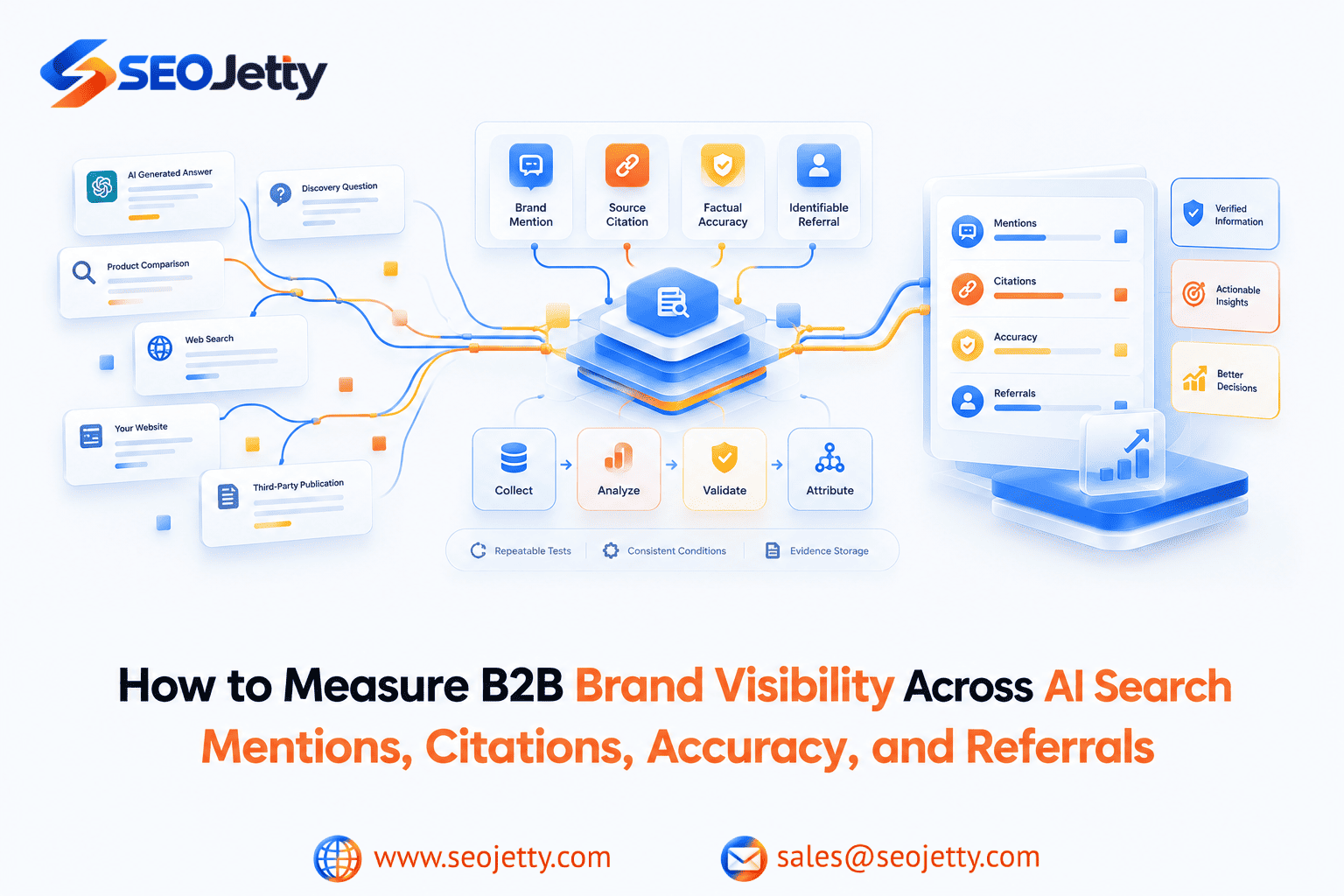
Clear explanations and accurate product information are useful to readers. They are not a promise of AI citations. If an agency tracks mentions in AI answers, ask it to document the platform, prompts, date, and sampling method. Treat the findings as observations from that sample.
AI can assist with research organization and drafts, but product claims still need review. Google’s AI content guidance emphasizes checking accuracy and warns about generating many pages without added value. Ask who signs off on published copy and how incorrect claims are corrected.
Compare proposals by accepted deliverables
Word count makes proposals easy to price but says little about their usefulness. Compare the cost of an accepted, implemented page, including research, review, and publishing.
Require each proposal to identify the page types, research inputs, revision allowance, approval process, CMS responsibilities, and reporting. Agree that a product comparison must use verified specifications and that unsupported claims must be removed before acceptance.
Ask whether technical SEO, photography, product testing, translations, and analytics setup are included or separately scoped. These dependencies can materially change the time and cost of delivery. Check content ownership, account access, subcontracting arrangements, and handover requirements in the agreement.
SEO Jetty lists AI-powered SEO and content optimization among its services. If you are considering the company, request an ecommerce-specific scope covering the evidence, approvals, implementation, and reporting described here.
Start with a manageable pilot
As a practical starting point, select one category, a small group of related products, and one customer decision guide. Adjust the scope to your catalog and budget. This is a suggested delivery exercise, not a forecast of traffic or revenue.
- Record the baseline. Save existing copy, relevant performance data, customer questions, and known technical issues.
- Approve the rationale. Agree why each page needs work and which information is missing.
- Review evidence and copy. Have a product owner check claims and an editor check clarity.
- Publish and inspect. Confirm that approved copy, links, and mobile layouts appear correctly.
- Review delivery and outcomes separately. Assess accuracy and execution first, then performance as sufficient data becomes available.
A short pilot can show whether an agency communicates well and produces useful work. It cannot establish a reliable long-term SEO return. Agree review points around the store’s traffic and buying cycle.
Measure performance without overstating attribution
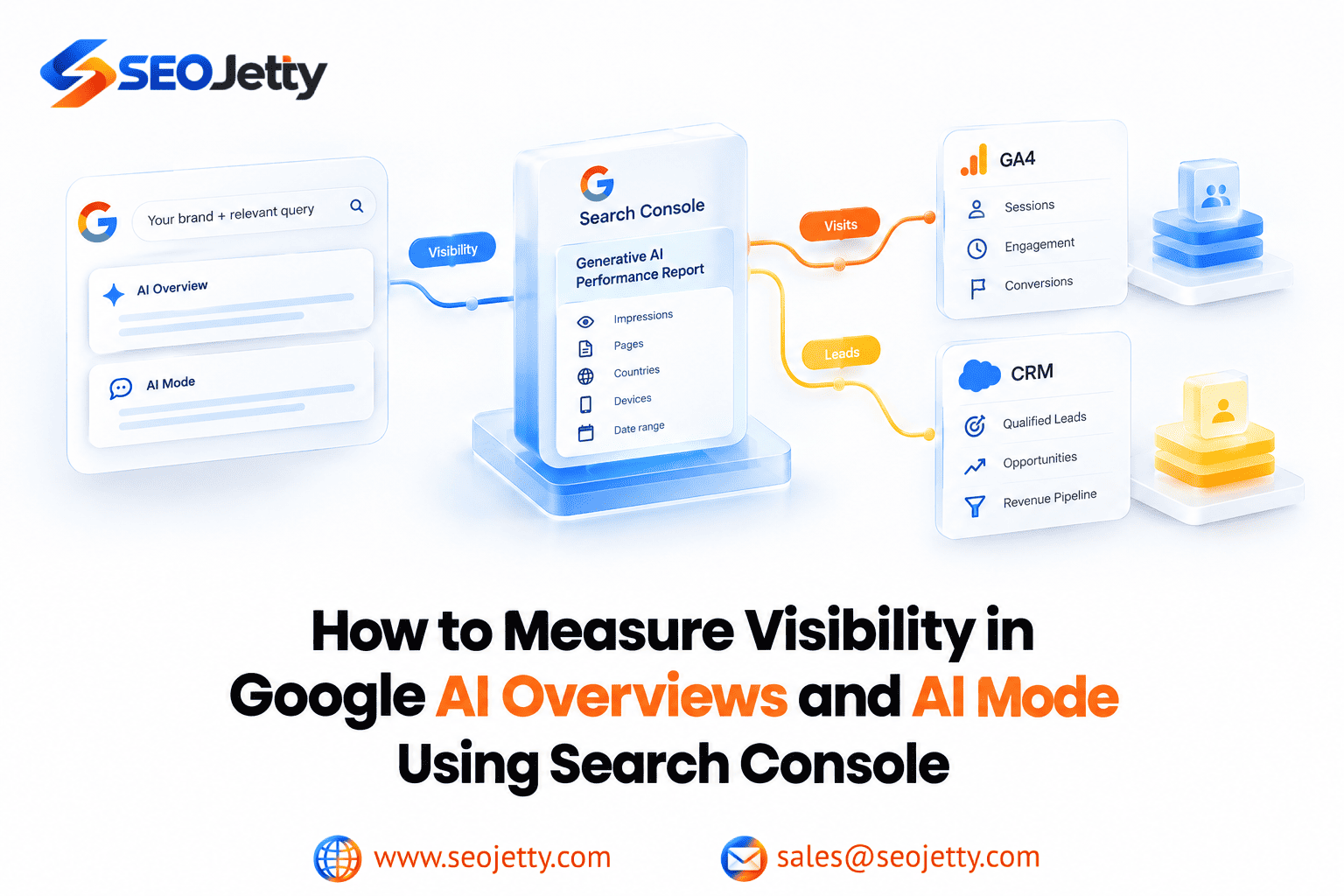
Use a small reporting set tied to the original problem. Search Console impressions and clicks can describe search exposure. Analytics can show product exploration and purchases after content visits, subject to consent, tracking coverage, and the attribution model.
Keep product, category, and editorial pages separate where practical. Segment branded and non-branded queries when the data supports it. Compare equivalent seasonal periods and annotate changes in stock, prices, promotions, navigation, and tracking.
For each report, ask: what changed, what might explain it, how confident are we, and what should happen next? If a guide attracts visitors who cannot buy your products, revisit the audience and intent. If visitors reach products but do not purchase, investigate pricing, availability, shipping, and checkout before attributing the problem to copy.
Revenue associated with content is not necessarily revenue caused by content. Include production and maintenance costs when assessing commercial value. Content needs ongoing review when products or policies change.
Frequently asked questions
Should the agency receive administrator access to the store?
Give each person the access needed for their assigned tasks. Use individual accounts and an agreed approval process. Keep control of the domain, analytics, and billing within the business.
Who should own the finished copy?
Specify ownership and reuse rights in the contract. Include briefs, research records, editable files, and images or other licensed assets in the handover terms.
What happens when a product is discontinued?
Assign responsibility for reviewing guides and recommendations affected by catalog changes. Agree how the content team will receive stock and discontinuation notices.
Should an agency contact customers for interviews?
Interviews can reveal useful purchasing questions. Your team should approve recruitment, consent, and the intended use of quotes before customer outreach begins.
Can a supplier also write for a competitor?
Resolve confidentiality, conflicts, and any exclusivity terms before sharing sensitive information. Specify that your proprietary research and internal data cannot be reused for another client.
What should happen when the engagement ends?
Require a handover of completed work, open tasks, source records, and reporting definitions. Remove access that is no longer needed and assign responsibility for maintaining published pages.
Choose the partner whose work you can evaluate
A useful ecommerce content program starts with a customer problem and ends with a decision about what to improve next. Choose an agency that can explain its priorities, verify product information, deliver through a clear approval process, and discuss performance with appropriate limits. Those habits give your team a sound basis for judging the investment.